Building a reference check process your whole agency can follow consistently
A step-by-step guide to building a reference check process every consultant in your agency can follow, from consent and questions to verification, reporting and POPIA.
For recruiters, there isn't one reference check process. There are as many processes as there are consultants. One always phones, another emails a Word document, a third has a favourite set of questions saved in their notes. One gets written consent, another "mentions it" to the candidate.
It mostly works, until it doesn't. A fake reference slips through because one consultant didn't check the referee's company. A client complains that two candidates' references can't be compared. A candidate asks what information you hold about them, and nobody can find it.
A consistent process fixes all of this. It makes references fairer and more reliable, makes your agency look more professional to clients, and makes compliance far simpler. Here's how to build one your whole team will actually follow.
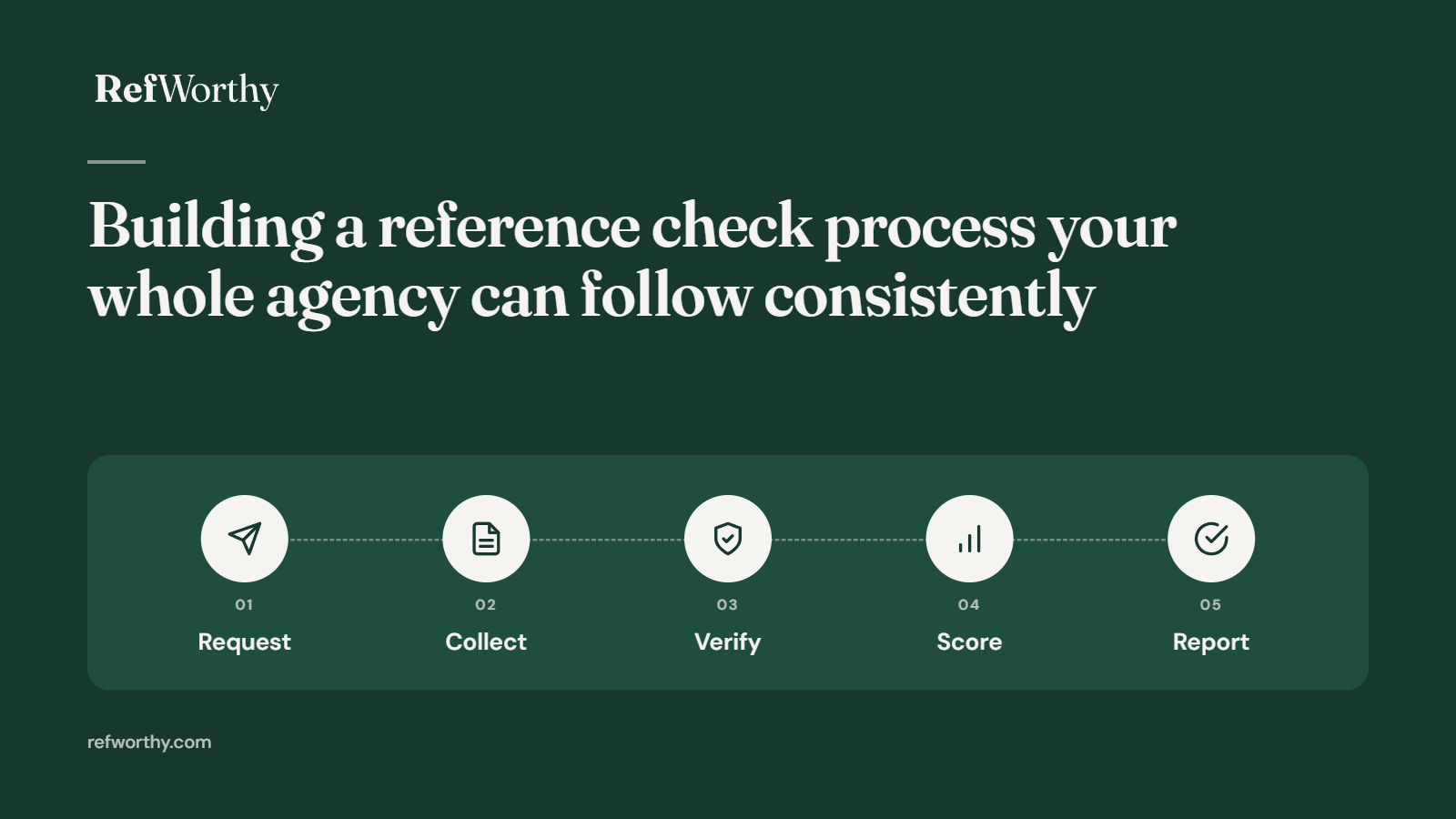
The process at a glance
A good reference check process doesn't need to be complicated. It needs to be the same every time, for every candidate, whoever's handling it.
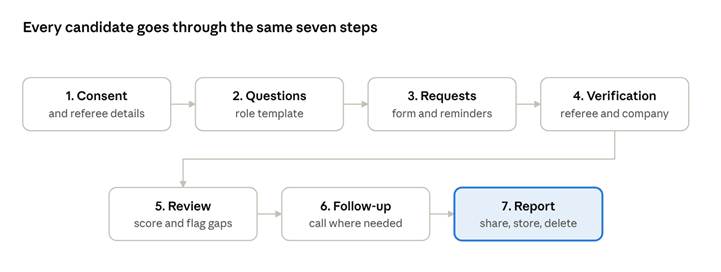
The written reference does most of the work, and calls are kept for referees who request one. The final step isn't just sending a report. It also covers storing the record securely and deleting it when it's no longer needed.
Building the process, step by step
Before you change any tools, write down how references work at your agency. Keep it to a page, so people actually read it. It should answer a handful of questions: at what stage references are checked, how many referees each candidate needs, which roles need a direct manager as a referee, when a current employer can be contacted, and who signs off if something looks wrong. If a new consultant could follow it on their first day, it's clear enough.
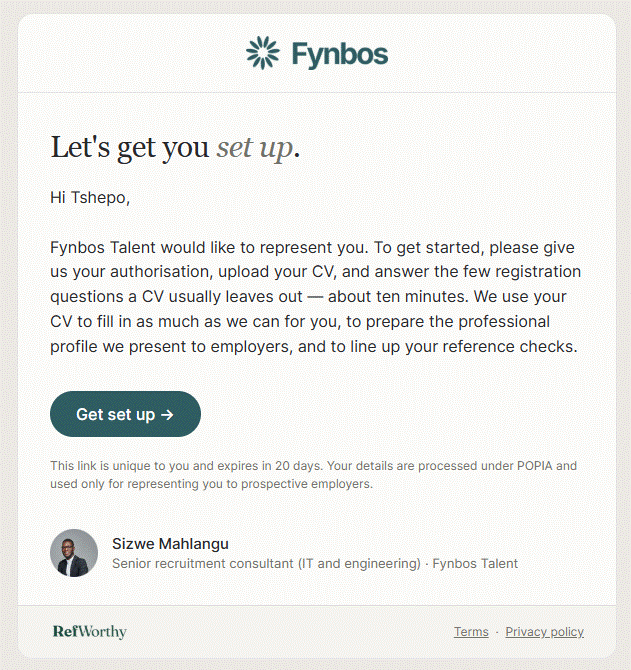
Getting consent is the first step in the process.
1. Get consent and the right referee details
Every check starts the same way. The candidate gets a clear explanation of what you'll check and why, and gives written consent, which is good POPIA practice. Then collect referees' full names, current job titles, work email addresses and how they worked with the candidate. Ask for at least one direct line manager from a recent role, and ask the candidate to let their referees know a request is coming.
2. Use a question template for each type of role
The biggest source of inconsistency is the questions themselves. Build a small set of templates, for example entry level, specialist, management and executive. Each one should combine a core set of questions every candidate is asked with a few that are specific to the role. Keep every question job-related and ask for examples, not opinions. Agree as a team how much weight each question carries, so a strong answer on a critical skill counts for more than a nice comment about punctuality.
3. Send every request the same way
Decide on one channel for the first round and stick to it. A secure online form, sent from your agency's own email domain, is easiest to standardise: every referee sees the same questions, answers in writing and leaves a clear record. Set a standard reminder schedule, such as a reminder after two working days and a second nudge a day or two later, and agree when to ask the candidate for an alternative referee.
4. Verify every referee
Make verification a fixed step, not something people do when they have time. Confirm the company exists and that the referee works or worked there, using details you find yourself rather than ones the candidate supplied. Check that the referee's role and dates overlap with the candidate's. Watch for suspicious signs, such as a reference completed from the same device or network as the candidate.
5. Review and score consistently
Agree what "good" looks like before you read the answers. With weighted questions, every candidate gets a comparable score. Just as important, agree what counts as a red flag, such as a low score on a critical question, dates that don't match the CV or a verification alert, and what happens next when one appears.
6. Follow up
Use phone calls to explore specific answers or red flags, not to repeat the whole reference. Record what was said alongside the written reference. If a concern remains, give the candidate a fair chance to respond before it decides the outcome, and escalate serious issues to a senior consultant or manager.
7. Report, store and delete
Send every client the same branded report format, so references look professional and can be compared across candidates. Share it only with the people who need it. Store every reference in one central place, not in personal inboxes or chat apps, and delete or de-identify records when your agreed retention period ends.
Making it stick
Writing a process is the easy part. Getting a busy team to follow it every time takes a little more thought.
Give it an owner. Someone, often an operations lead or senior consultant, should own the policy and templates. They answer questions, approve changes and make sure the process keeps up with new roles, clients and regulations.
Make the right way the easy way. People follow processes that save them effort and quietly skip the ones that don't. If the standard templates, reminders and report format are built into the tool your team already uses, following the process takes less work than going around it.
Train new starters on day one. Include reference checks in onboarding, with a walk-through of the policy, the templates and a real example report. It's far easier to start someone on the right habit than to correct an old one.
Check a sample every month. Pick a few completed reference checks at random and review them against the policy. Was consent recorded? Were all referees verified? Was the right template used? Share what you find with the team, without turning it into a blame exercise.
Track a few simple numbers. Average turnaround in working days, the share of references completed without a reminder, and the number of red flags raised will tell you whether the process is working and where it's getting stuck.
Review it twice a year. Ask consultants what slows them down and ask a few clients what they think of your reports. Update the templates and the policy based on what you learn.
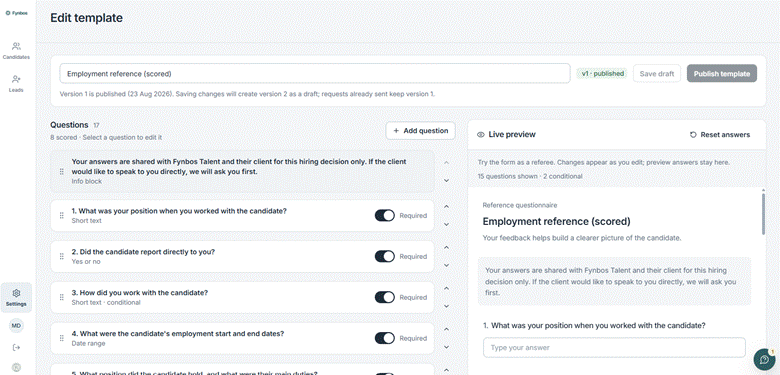
RefWorthy's template editor allows you to customise your questions.
A reference-checking platform can do much of this heavy lifting. RefWorthy, for example, lets your agency set up question templates with weighted scoring, sends every request from your own domain with automated reminders, flags suspicious activity and produces the same branded report every time. Paid plans include unlimited users, so the whole team works from the same system.
Consistency is a competitive advantage
A consistent reference check process does more than keep you compliant. It catches more fake references, gives clients reports they can trust and compare, and frees consultants from reinventing the process with every candidate. Write it down, build it into your tools, and check that it's being followed. Your clients will notice the difference.
RefWorthy helps recruitment agencies and HR teams run the same structured reference check every time, with role templates, weighted scoring, automated reminders and branded reports. Start free with your first three candidates.